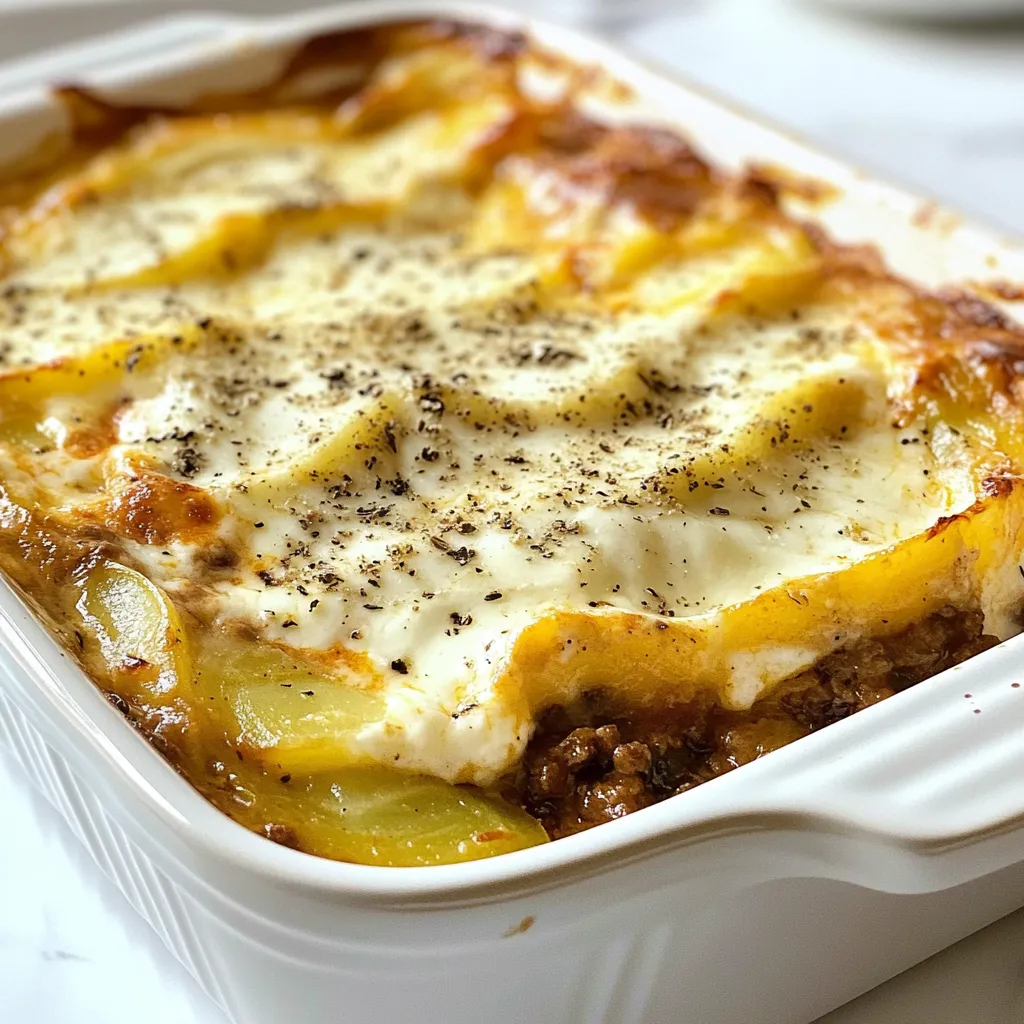
Are you ready to dive into the delicious world of Greek cuisine? Greek Moussaka is a savory delight, featuring layered eggplant, hearty meat, and creamy béchamel sauce. It’s the perfect comfort food for any occasion. In this guide, I’ll walk you through each step, from selecting fresh ingredients to perfecting your baking technique. Let’s make a dish that will impress your family and friends, one delicious layer at a time!
Why I Love This Recipe
- Rich Flavor Profile: The combination of spices like cinnamon and allspice adds a warm, aromatic quality to the dish, making each bite a delightful experience.
- Layered Textures: The contrast between the creamy béchamel, tender vegetables, and hearty meat filling creates a satisfying mouthfeel that is simply irresistible.
- Make Ahead Option: This dish can be prepared in advance and baked just before serving, making it perfect for gatherings or busy weeknights.
- Versatile Ingredients: While traditional, the moussaka can be adapted with different meats or vegetables based on your preferences, allowing for creativity in the kitchen.
Ingredients
List of Traditional Ingredients
– 2 large eggplants
– 2 medium potatoes
– 1 lb ground beef or lamb
– 1 onion
– 2 cloves garlic
– 1 can diced tomatoes (14 oz)
– 2 tablespoons tomato paste
Additional Seasonings
– 1 teaspoon dried oregano
– 1 teaspoon ground cinnamon
– 1/2 teaspoon allspice
– 2 tablespoons olive oil
– Salt and pepper
Béchamel Sauce and Cheese
– You can use store-bought or homemade béchamel.
– For cheese, use mozzarella and Parmesan.
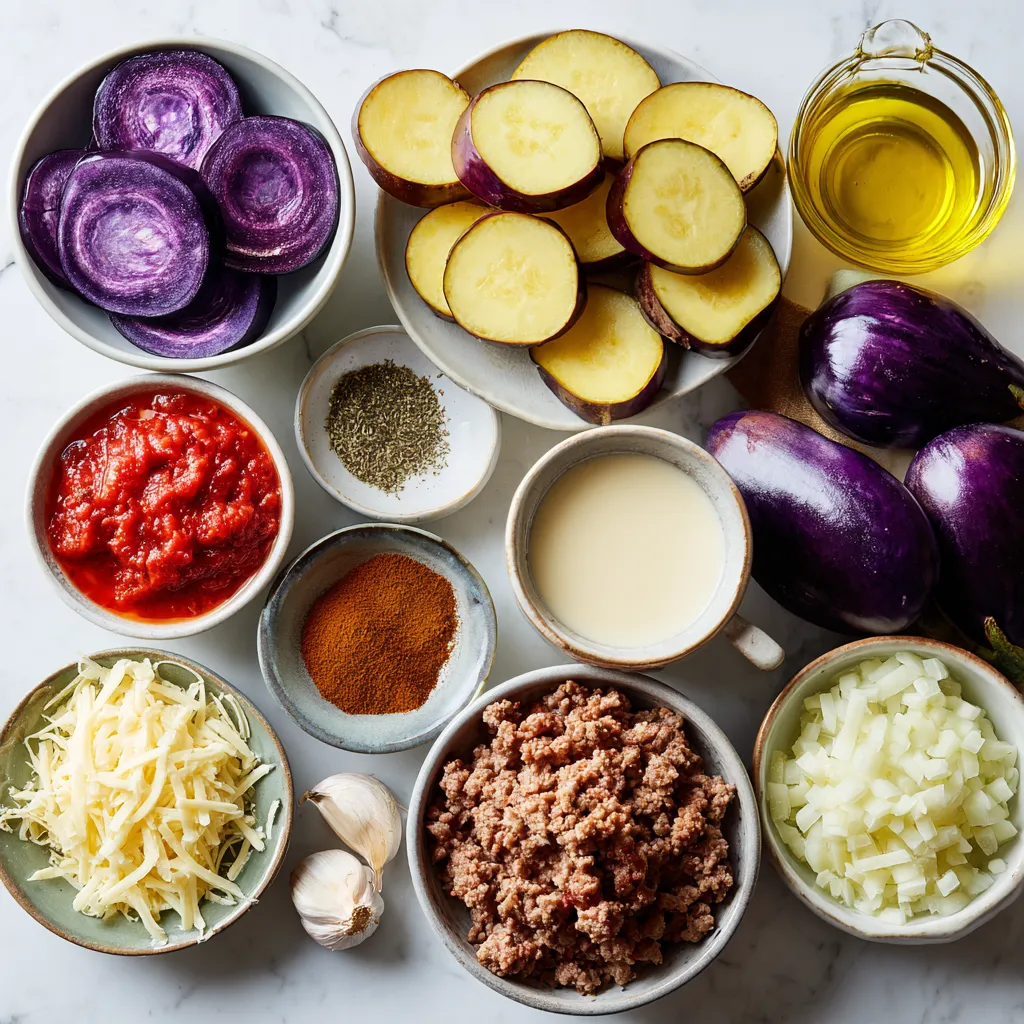
When I make Greek moussaka, I love using fresh ingredients. The eggplants give a rich taste. The potatoes add comfort and heartiness. Ground beef or lamb creates a savory filling. Onions and garlic bring a strong aroma to the dish. Diced tomatoes and tomato paste add moisture and sweetness.
For seasonings, I choose dried oregano for its earthy flavor. Ground cinnamon brings warmth, while allspice adds a hint of spice. Using olive oil helps to bring all the flavors together. I always add salt and pepper to taste.
The béchamel sauce is key to a great moussaka. You can buy it ready-made or make it at home. Either way, it needs to be creamy. I like to sprinkle mozzarella and Parmesan cheese on top. They melt beautifully and create a golden crust.
These ingredients create the delicious layers that make moussaka a favorite dish.
Step-by-Step Instructions
Preparing the Vegetables
Salting Eggplant Slices
Start by slicing your eggplants into 1/4 inch rounds. Sprinkle them with salt. Let them sit for 30 minutes. This step helps remove extra moisture and bitterness. Rinse the slices and pat them dry.
Cooking Potatoes Until Tender
Peel and slice the potatoes into 1/4 inch rounds. Boil salted water in a large pot. Add the potato slices and cook for 5-7 minutes. They should be tender but not mushy. Drain the potatoes and set them aside.
Sautéing the Eggplant
Heat Olive Oil and Frying
In a skillet, heat olive oil over medium heat. Add the eggplant slices in batches. Fry them until golden brown on both sides. This gives them a rich flavor and nice texture.
Patting Dry
Once fried, transfer the eggplant to paper towels. This helps absorb any extra oil. Keeping the eggplant dry ensures a lighter dish.
Making the Meat Filling
Sautéing Onions and Garlic
In the same skillet, add chopped onions and minced garlic. Sauté until soft and fragrant. This step builds a great base for your meat filling.
Browning the Meat with Spices
Next, add ground beef or lamb to the skillet. Cook until the meat is browned. Stir in diced tomatoes, tomato paste, oregano, cinnamon, allspice, salt, and pepper. Let the mixture simmer for about 15 minutes. This thickens the filling and melds the flavors.
Assembling the Moussaka
Layering Ingredients in Baking Dish
Take a greased baking dish. Start with half of the potato rounds at the bottom. Next, add half of the eggplant slices. Then, layer the meat filling on top.
Adding Béchamel Sauce and Cheese
Repeat the layers with the remaining potatoes and eggplant. Finally, spread the béchamel sauce over the top layer. Make sure it covers all the edges. Sprinkle grated mozzarella and Parmesan cheese on top for a delicious finish.
Baking the Moussaka
Preheating the Oven
Preheat your oven to 375°F (190°C). This ensures your moussaka cooks evenly.
Baking Time and Temperature
Bake the moussaka for 30-35 minutes. You want the top to be golden brown and bubbly. This is the perfect moment to enjoy the aroma wafting through your kitchen.
Cooling and Serving
Cooling Time Before Slicing
After baking, remove the moussaka from the oven. Let it cool for 15-20 minutes. This helps the layers set, making it easier to slice.
Serving Suggestions
Serve your moussaka warm. Pair it with a simple Greek salad or some crusty bread for a complete meal. Enjoy every savory layer!
Tips & Tricks
Selecting the Right Eggplant
When choosing eggplant, look for smooth, shiny skin. Good eggplants feel firm and heavy for their size. Avoid any that have soft spots or wrinkles. If eggplants aren’t available, zucchini is a great alternative. You can also use mushrooms for a different taste.
Making a Creamy Béchamel Sauce
To make sure your béchamel sauce stays lump-free, whisk constantly while cooking. Use a low heat to avoid burning. If you prefer convenience, store-bought is fine, but homemade offers a richer flavor. You can make it using butter, flour, and milk.
Perfecting Layering Technique
Layer thickness matters. Aim for even layers so each bite tastes balanced. Ensure the ingredients are spread out well. This helps to keep the moussaka from being too dry or too soggy. Each layer should complement the others for the best flavor.
Pro Tips
- Proper Salting of Eggplant: Salting the eggplant before cooking helps to draw out moisture and bitterness, resulting in a creamier texture in your moussaka.
- Layering Technique: For better flavor distribution, make sure to alternate layers of potatoes, eggplant, and meat filling evenly. This ensures each slice has a balanced taste.
- Béchamel Consistency: If you’re making béchamel from scratch, ensure it’s thick enough to hold its shape on top of the moussaka; a runny sauce can lead to a soggy dish.
- Let it Rest: Allowing the moussaka to cool for 15-20 minutes before slicing helps the layers to set, making it easier to serve and enjoy.
Variations
Vegetarian Moussaka Options
You can make a tasty vegetarian moussaka. Use lentils or chickpeas instead of meat. They add protein and a nice texture. You can also mix in extra vegetables. Spinach, zucchini, or mushrooms work well. These additions boost flavor and nutrients.
Different Meats to Try
You don’t have to stick to beef or lamb. Pork or turkey can also be delicious choices. They add different flavors to your moussaka. For a spicy twist, try chorizo. It gives the dish a kick and surprises your taste buds.
Regional Variations in Greece
Moussaka changes by region in Greece. Some areas use potatoes, while others skip them. The cooking styles vary, too. Some cooks make it creamier, while others prefer a drier dish. Popular sides include Greek salad or crusty bread. These add freshness and balance to your meal.
Storage Info
Refrigeration Tips
To store leftovers, let the moussaka cool completely. Then, cover it tightly with plastic wrap or aluminum foil. Place it in the fridge. This keeps it fresh. You can enjoy it within three to four days.
Freezing Moussaka
Freezing moussaka is simple. First, cut it into portions. Wrap each piece in plastic wrap. Then, place them in a freezer-safe container. It can stay frozen for up to three months. When ready to eat, thaw it overnight in the fridge.
Reviving Leftovers
To revive leftover moussaka, reheat it in the oven. Preheat to 350°F (175°C). Heat for about 20 minutes, until hot throughout. For a twist, add some fresh herbs on top. You can also serve it with a fresh salad for a light meal.
FAQs
What is the origin of Moussaka?
Moussaka has roots in the Middle East. It spread to Greece during the Ottoman period. Each region has its own twist on the dish. In Greece, it became a symbol of comfort food. The blend of flavors and textures makes it special. Layers of eggplant, meat, and béchamel create a rich experience. This dish celebrates the Mediterranean diet with fresh ingredients.
Can I make Moussaka ahead of time?
Yes, you can make Moussaka ahead of time. This dish stores well in the fridge. Prepare it a day in advance to let the flavors blend. After cooking, cool it completely. Cover it tightly with foil or plastic wrap. Store it in the fridge for up to three days. Reheat it in the oven until warm.
What can I serve with Moussaka?
Moussaka pairs well with simple Greek sides. Consider a fresh Greek salad with tomatoes and cucumbers. Tzatziki sauce adds a cool, creamy touch. You can also serve crusty bread for dipping. Another option is roasted vegetables, which add color and flavor. Each of these sides complements the rich layers of Moussaka.
How can I make Moussaka gluten-free?
To make Moussaka gluten-free, substitute the béchamel sauce. Use cornstarch or a gluten-free flour blend instead. You can also use almond flour for a nutty taste. Ensure the meat and vegetables are free from gluten. This way, you can enjoy Moussaka without worry. Each layer will still be delicious and satisfying.
Moussaka is a hearty dish made with layers of eggplant, meat, and béchamel sauce. We explored traditional ingredients, cooking methods, and tips to enhance your dish. You can customize it for dietary needs or even add unique flavors from different regions. Remember, fresh ingredients and careful layering make all the difference in taste. Try these steps next time you cook moussaka, and enjoy a delicious meal that brings joy to your table. Your next culinary adventure awaits with every bit