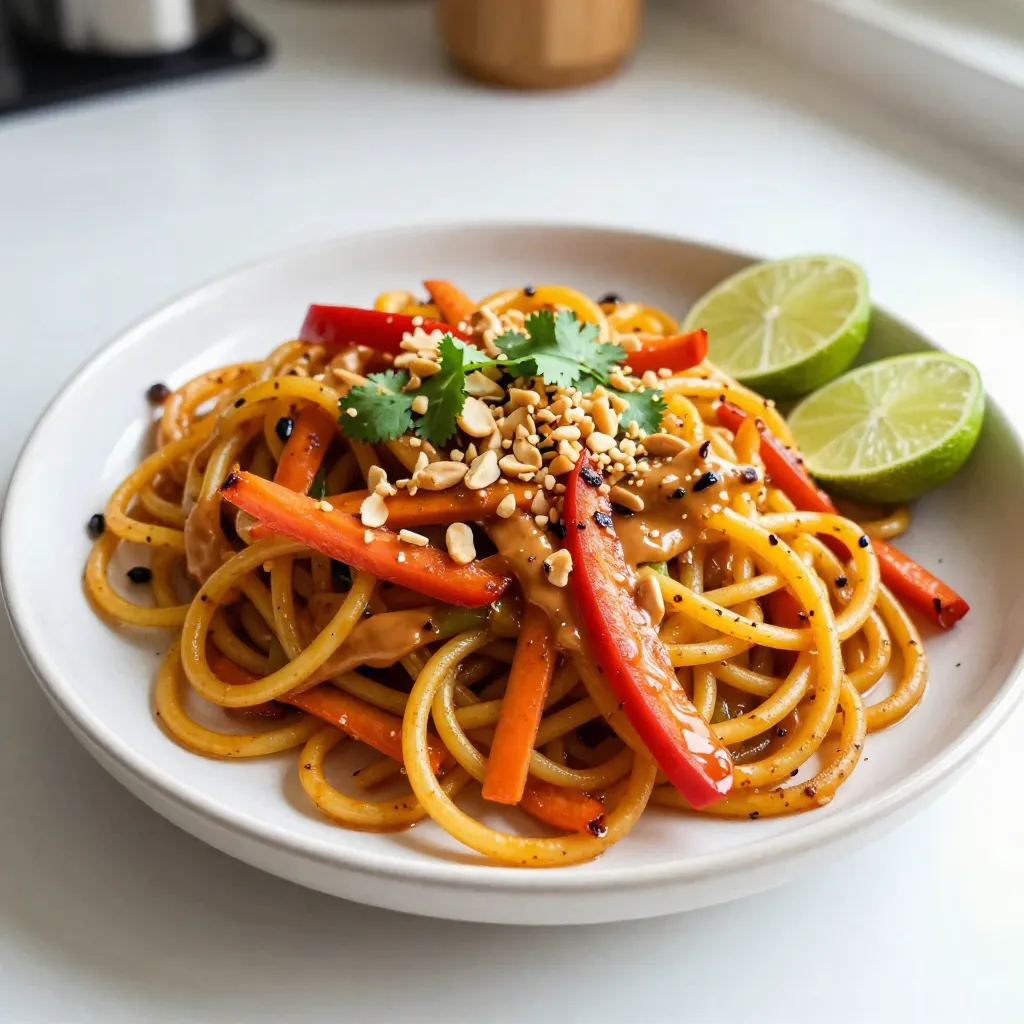
Are you ready to enjoy a healthy twist on a classic dish? My Spaghetti Squash Pad Thai is both flavorful and easy to make. This recipe swaps traditional noodles for nutritious spaghetti squash, packing in flavor without the extra carbs. In this post, I’ll share all the ingredients, step-by-step instructions, and tips to help you create this delightful meal. Let’s dive in and discover your new favorite dish!
Why I Love This Recipe
- Healthy Alternative: This Spaghetti Squash Pad Thai offers a nutritious twist on the traditional dish, incorporating more vegetables and fewer carbs.
- Quick and Easy:
- Flavor Packed: The combination of garlic, soy sauce, and lime juice creates a vibrant, mouthwatering flavor that will satisfy your taste buds.
- Customizable: You can easily adjust the spice level and add your favorite proteins, making it versatile for different dietary preferences.
Ingredients
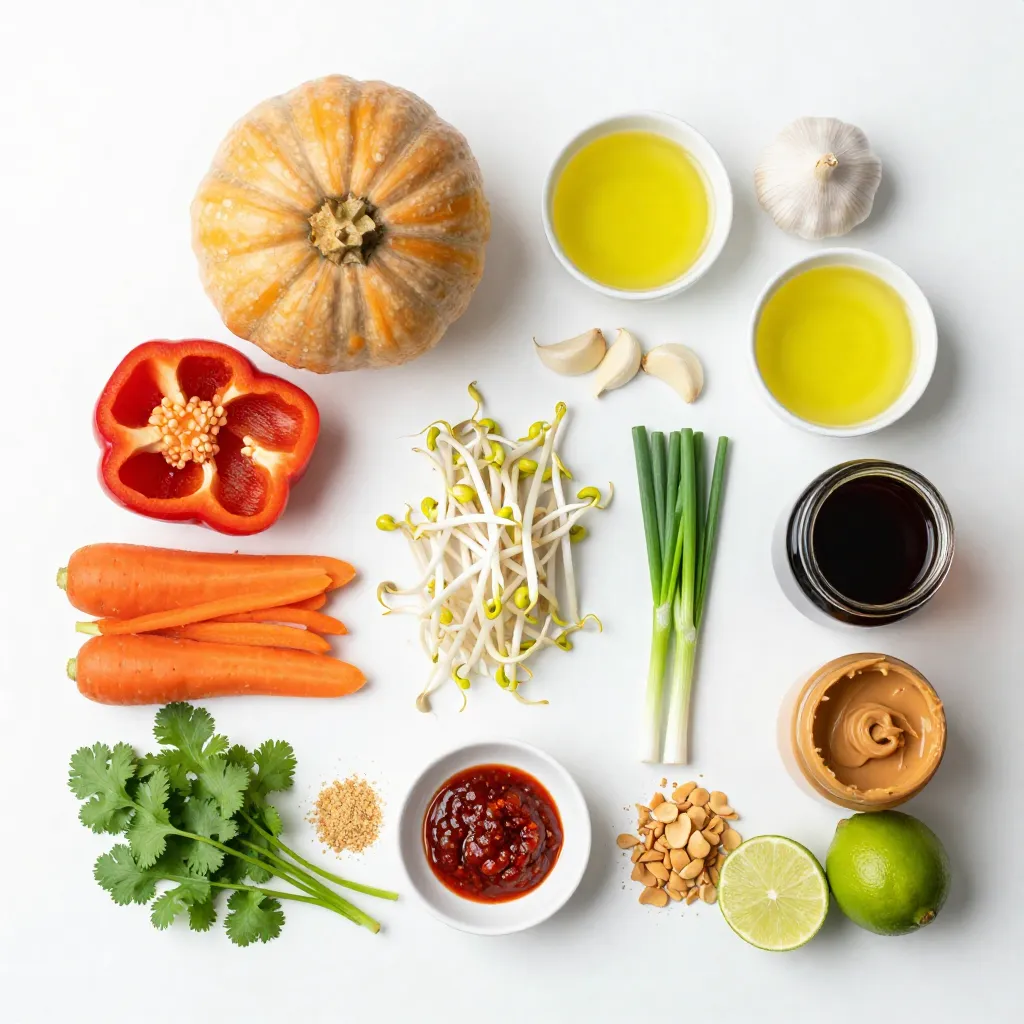
List of Ingredients
– 1 medium spaghetti squash
– 2 tablespoons vegetable oil
– 3 cloves garlic, minced
– 1 red bell pepper, thinly sliced
– 2 carrots, julienned
– 1 cup bean sprouts
– 2 green onions, chopped
– 3 tablespoons soy sauce (or tamari for gluten-free)
– 1 tablespoon peanut butter
– 1 tablespoon lime juice
– 1 teaspoon chili paste (adjust for spice preference)
– ¼ cup crushed peanuts (for garnish)
– Fresh cilantro (for garnish)
– Lime wedges (for serving)
Nutritional Information of Key Ingredients
Spaghetti squash is a low-calorie food. It has about 42 calories per cup. It is rich in fiber, which aids digestion. Garlic packs a punch of flavor and has health benefits too. One clove has about 4 calories and is great for your immune system. Red bell pepper is full of vitamins A and C. It has only 31 calories per cup. Carrots are not just crunchy; they have beta-carotene for good vision. Bean sprouts add a nice crunch and are low in calories.
Ingredient Substitutions
If you don’t have spaghetti squash, use zucchini instead. Zucchini gives a similar texture. For a nut-free option, skip the peanut butter and use sun butter. If you can’t find fresh bean sprouts, use shredded cabbage. For a gluten-free choice, tamari is an excellent swap for soy sauce. You can also adjust the spice by using less chili paste or omitting it altogether.
Step-by-Step Instructions
Preparation of Spaghetti Squash
To start, preheat your oven to 400°F (200°C). Grab a medium spaghetti squash. Cut it in half lengthwise and scoop out the seeds. Drizzle the cut sides with olive oil. Sprinkle some salt and pepper on top. Place the squash cut side down on a baking sheet. Roast it for about 30 to 40 minutes. You want it tender. Once it cools slightly, use a fork to shred the flesh into spaghetti-like strands.
Cooking the Vegetable Medley
While your squash roasts, heat 2 tablespoons of vegetable oil in a large skillet over medium heat. Add 3 cloves of minced garlic and sauté for about 30 seconds. This will fill your kitchen with a lovely aroma! Next, stir in the thinly sliced red bell pepper and julienned carrots. Cook these for 3 to 4 minutes until they get tender. Then, toss in 1 cup of bean sprouts and half of the chopped green onions. Mix everything well.
Combining Ingredients and Finishing Touches
In a small bowl, whisk together 3 tablespoons of soy sauce, 1 tablespoon of peanut butter, 1 tablespoon of lime juice, and 1 teaspoon of chili paste. Pour this sauce over the veggies in the skillet. Toss until everything is coated evenly. Now, gently fold in the shredded spaghetti squash. Cook it all together for another 2 to 3 minutes until heated through. Don’t forget to taste and adjust the seasoning if you want more spice or tang. Finally, serve hot, garnished with crushed peanuts, remaining green onions, and fresh cilantro. Add lime wedges on the side for that extra zesty kick!
Tips & Tricks
How to Achieve Perfectly Roasted Spaghetti Squash
To get the best spaghetti squash, start by cutting it in half lengthwise. Scoop out the seeds to make space. Drizzle oil on the cut sides and sprinkle salt and pepper. Place it cut side down on a baking sheet. Roast it at 400°F for 30 to 40 minutes. The squash is ready when tender. Use a fork to shred the flesh into strands. This gives you the perfect base for your Pad Thai.
Enhancing Flavor with Additional Garnishes
Garnishes are key to making your dish pop. After serving, sprinkle crushed peanuts on top for crunch. Add more green onions for freshness. Fresh cilantro provides a herbaceous note. Lime wedges add a bright kick. Each garnish enhances the flavors, making your meal more enjoyable.
Spice Level Adjustments for Different Palates
Adjusting spice is easy and fun. Start with one teaspoon of chili paste for a mild flavor. If you like it spicier, add more to taste. You can also serve extra chili paste on the side. This allows guests to customize their heat level. Make it as spicy or mild as you like!
Pro Tips
- Choose a ripe spaghetti squash: Look for a squash that is firm and has a golden-yellow color. This ensures the best flavor and texture.
- Customize the veggies: Feel free to add other vegetables like snap peas or broccoli for added nutrition and color.
- Adjust the sauce: If you prefer a creamier sauce, add a splash of coconut milk to the sauce mixture for extra richness.
- Garnish generously: Don’t skip the crushed peanuts and cilantro—they add crunch and freshness that elevate the dish.
Variations
Protein Additions (tofu, chicken, shrimp, etc.)
You can change up the protein in your Spaghetti Squash Pad Thai. Tofu works well for a vegan option. Just press and cube it before cooking. If you prefer meat, chicken or shrimp is great too. Cook your protein first, then add the veggies. This way, your protein gets nice and crispy.
Vegan and Gluten-Free Options
To keep it vegan, stick with the tofu. Use tamari instead of soy sauce for gluten-free. This swap keeps the taste full without any gluten. You can also skip the peanut butter if you have a nut allergy. Just add more lime juice for a zesty kick.
Alternative Sauces and Flavor Profiles
Feel free to play with the sauce! Try adding sriracha for heat or coconut aminos for a sweeter taste. You can also mix in some hoisin sauce for a richer flavor. Each change gives a new twist on the classic dish. Use your taste buds to guide you!
Storage Info
How to Store Leftover Spaghetti Squash Pad Thai
To keep your Spaghetti Squash Pad Thai fresh, place it in an airtight container. You can store it in the fridge for up to three days. Make sure it cools down before sealing to avoid extra moisture.
Reheating Instructions for Best Results
When you’re ready to enjoy leftovers, heat them in a skillet over medium heat. Add a splash of water or soy sauce to keep it moist. Stir frequently for about five minutes until it’s hot. You can also use the microwave; just cover it and heat in short bursts.
Freezing Guidelines and Tips
If you want to freeze your Spaghetti Squash Pad Thai, use a freezer-safe container. It can last up to three months in the freezer. When you’re ready to eat it, thaw it overnight in the fridge. Reheat it in a skillet for the best texture. Avoid freezing with garnishes, like cilantro or crushed peanuts, to keep them fresh.
FAQs
What is spaghetti squash, and how does it compare to traditional noodles?
Spaghetti squash is a type of winter squash. When cooked, its flesh turns into strands that resemble spaghetti. This makes it a great low-carb option. Unlike traditional noodles, spaghetti squash has fewer calories and carbs. It also has a mild flavor that pairs well with many sauces and toppings. I love using it as a base for dishes like Pad Thai because it is light and fun to eat.
Can I make Spaghetti Squash Pad Thai ahead of time?
Yes, you can make Spaghetti Squash Pad Thai ahead of time. Cook the squash and veggies, then store them in the fridge. Just keep the sauce separate until you’re ready to eat. This keeps everything fresh and tasty. When you are ready, just reheat everything together in a skillet. It will taste just as good!
What are the health benefits of using spaghetti squash in this recipe?
Using spaghetti squash provides many health benefits. It is low in calories and carbs, making it a smart choice for many diets. It is high in vitamins A and C, which are good for your immune system. Plus, it has fiber, which helps with digestion. Spaghetti squash is also a gluten-free option, so it’s friendly for those with gluten sensitivities. By choosing spaghetti squash, you make a healthy and delicious meal!
In this blog post, we explored how to create a delicious Spaghetti Squash Pad Thai. We listed key ingredients, their nutrition, and smart substitutions. You learned step-by-step on preparing and cooking the dish. I shared tips for roasting squash and adjusting spice levels. We discussed protein options and ways to make it vegan. Lastly, I provided storage tips to keep leftovers fresh.
Cooking should be fun and tasty. I hope you enjoy making this dish as much as I d