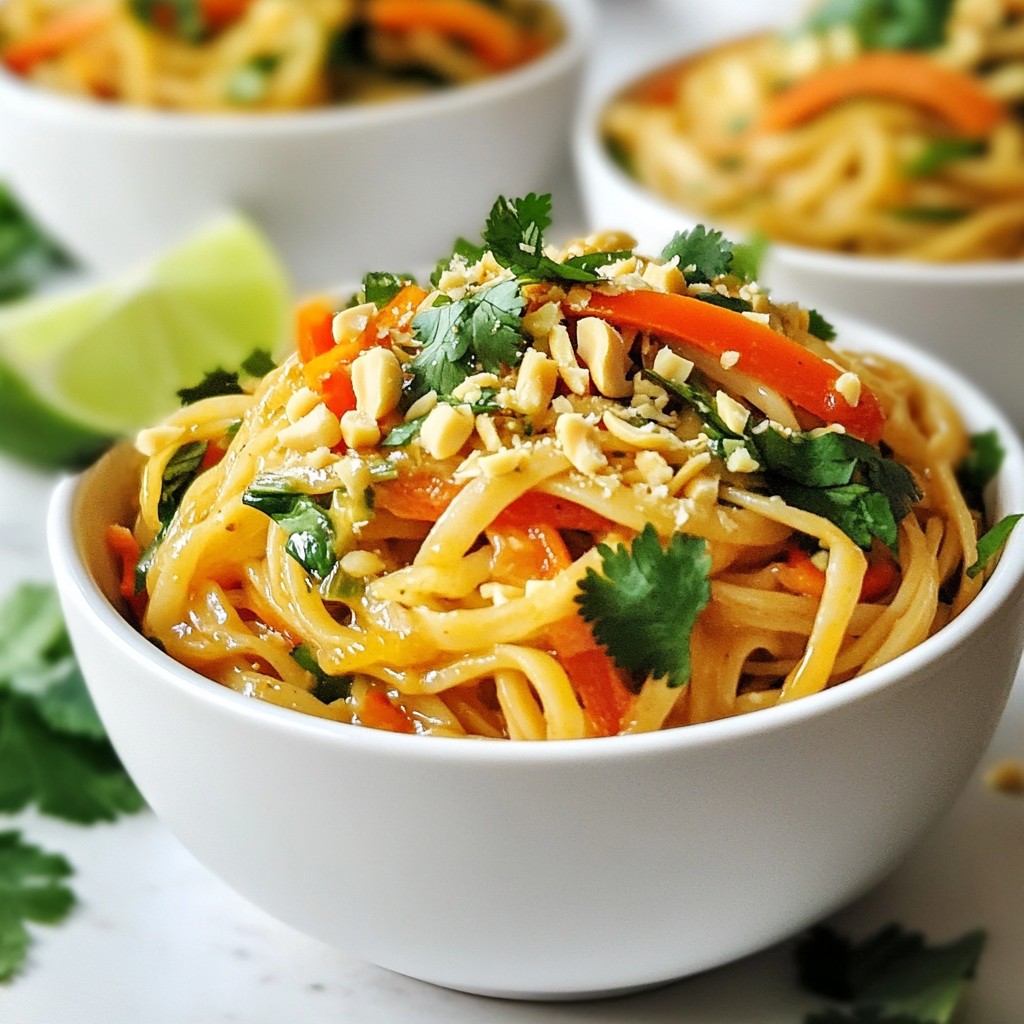
Craving a quick and flavorful dish? Look no further than Spicy Thai Peanut Noodles! This tasty recipe blends creamy peanut sauce, fresh veggies, and tender noodles in just one pot. Perfect for busy weeknights or an easy meal prep. Get ready to impress your friends and family with this dish that packs a spicy punch and stands out in flavor. Let’s dive into how to whip this up in no time!
Why I Love This Recipe
- Delicious Flavor Combination: The combination of creamy peanut butter, savory soy sauce, and a kick of sriracha creates a mouthwatering sauce that perfectly coats the noodles.
- Quick and Easy: This recipe takes only 20 minutes from start to finish, making it a perfect option for busy weeknights or a last-minute meal.
- Customizable: You can easily adjust the spice level and add your favorite vegetables or proteins, making it versatile for any dietary preference.
- Healthy Ingredients: Packed with veggies and healthy fats from peanuts, this dish is not only delicious but also nutritious!
Ingredients
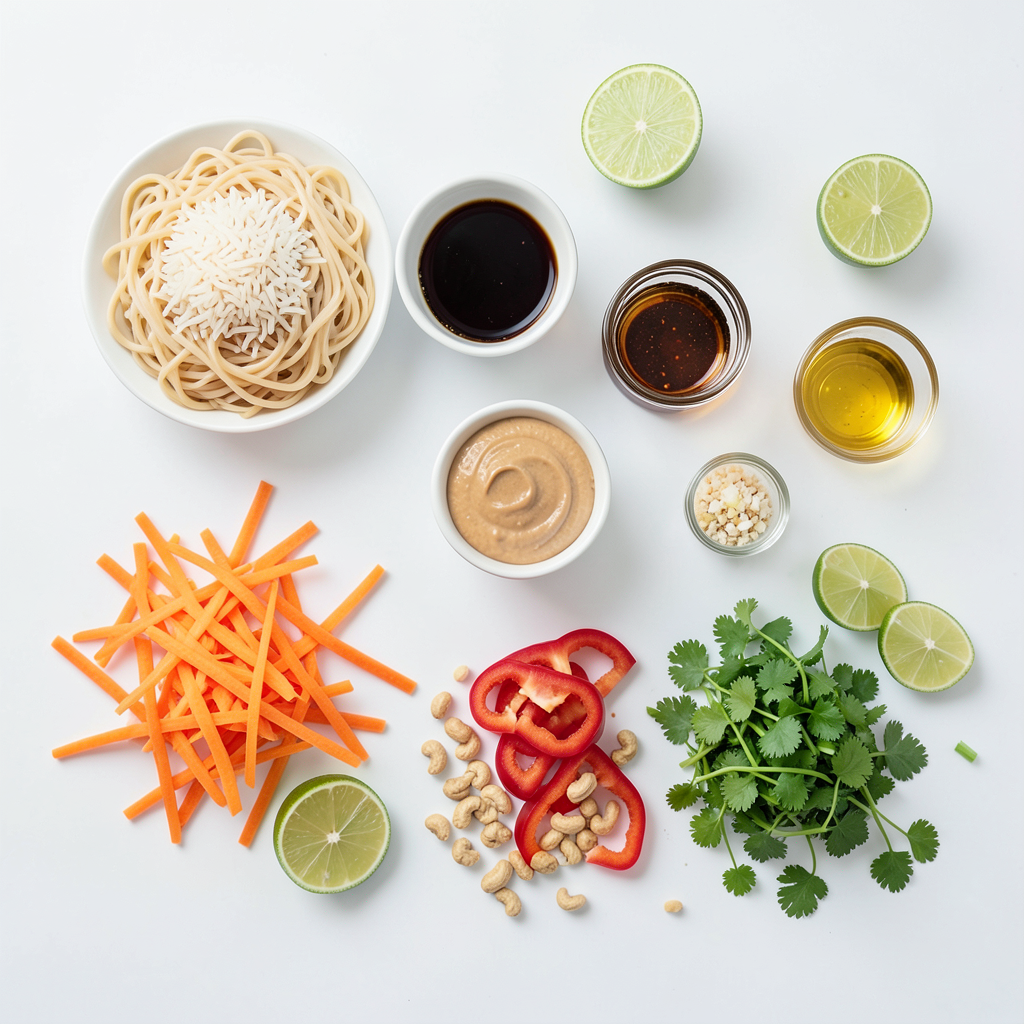
Main Ingredients for Spicy Thai Peanut Noodles
To make this tasty dish, gather these key ingredients:
- 8 oz rice noodles
- 1/2 cup creamy peanut butter
- 1/4 cup soy sauce
- 2 tablespoons sesame oil
- 2 tablespoons honey or maple syrup
- 1 tablespoon rice vinegar
- 1 tablespoon sriracha (adjust to taste)
- 1 carrot, julienned
- 1 red bell pepper, thinly sliced
- 3 green onions, chopped
- 1/4 cup chopped cilantro
- Crushed peanuts for garnish
- Lime wedges for serving
Each ingredient plays a role in creating bold flavors. The rice noodles serve as a soft base, while the peanut butter adds creaminess. Soy sauce brings umami, and sriracha adds heat.
Optional Garnishes
You can enhance your dish with these optional garnishes:
- Crushed peanuts
- Lime wedges
- Extra cilantro
These garnishes add crunch and fresh flavor. The lime juice brightens the dish, while crushed peanuts give a delightful texture.
Substitutions for Common Allergens
If you have allergies or dietary needs, consider these swaps:
- Use almond butter or sunflower seed butter instead of peanut butter for nut allergies.
- Replace soy sauce with tamari for a gluten-free option.
- Maple syrup can be swapped for agave nectar for a vegan choice.
These substitutions keep your dish safe while still being delicious. Always adjust the amounts to taste as you adapt the recipe to your needs.
Step-by-Step Instructions
Cooking the Rice Noodles
To start, boil a large pot of water. Add 8 oz of rice noodles and cook them. Follow the package instructions for the right time, usually about 4-6 minutes. When done, drain the noodles and rinse them under cold water. This stops the cooking and keeps them firm. Set the noodles aside for later.
Preparing the Peanut Sauce
Next, grab a medium bowl. Add 1/2 cup of creamy peanut butter. To this, pour in 1/4 cup of soy sauce, 2 tablespoons of sesame oil, and 2 tablespoons of honey or maple syrup. Then, add 1 tablespoon of rice vinegar and 1 tablespoon of sriracha. Whisk the mixture until it is smooth. If the sauce feels too thick, add a tablespoon of warm water. Keep adding until it reaches a nice, pourable consistency.
Sautéing the Vegetables
Now, take a large pan and heat it over medium heat. Add a splash of sesame oil to the pan. Toss in the julienned carrot and thinly sliced red bell pepper. Sauté these veggies for about 3-4 minutes. You want them to be slightly tender but still crisp. This adds great texture to your dish.
Combining Ingredients and Final Steps
Once the veggies are ready, add the drained noodles to the pan. Pour the peanut sauce over the noodles and mix everything together. Toss well to coat the noodles evenly in the sauce. After that, turn off the heat. Add chopped green onions and cilantro to the mix. Gently toss again. If you like it spicier, feel free to add more sriracha. To serve, divide the noodles into bowls. Garnish with crushed peanuts and lime wedges on the side for a fresh touch. Enjoy!
Tips & Tricks
How to Achieve the Best Flavor
To make these Spicy Thai Peanut Noodles really pop, use fresh ingredients. Fresh veggies bring color and taste. I love using crispy carrots and sweet red bell peppers. They add crunch to every bite. For the sauce, creamy peanut butter is key. It gives a rich, nutty taste. Mix it well with soy sauce for saltiness. Honey or maple syrup adds a nice touch of sweetness. Don’t forget rice vinegar; it adds a tangy flavor that balances everything.
Adjusting Spice Levels
If you like heat, sriracha is your friend. Start with one tablespoon and taste. You can always add more later. Remember, you can make it milder too. Just reduce the sriracha or skip it altogether. Everyone has different spice levels, so adjust as needed. By doing this, everyone at your table can enjoy the dish without sweat on their brow.
Presentation Tips for Serving
How you serve your dish matters! Use colorful bowls to make it pop. Just before serving, sprinkle crushed peanuts on top. This adds a nice crunch. Add lime wedges on the side for a splash of freshness. A squeeze of lime brightens up the flavors. I always add a bit of chopped cilantro for a burst of green. It looks great and tastes amazing!
Pro Tips
- Adjust the Heat: Feel free to modify the amount of sriracha based on your spice tolerance. Start with less and gradually increase until it meets your preference.
- Perfectly Cooked Noodles: To avoid mushy noodles, be sure to follow the package instructions closely and rinse them with cold water immediately after draining to stop the cooking process.
Variations
Adding Proteins such as Chicken or Tofu
You can easily add protein to your spicy Thai peanut noodles. Chicken is a great choice. Just cook it in the pan before adding the veggies. Cut it into thin strips for fast cooking. Tofu works well too. Use firm tofu, and pan-fry it until golden. This gives it a nice texture. Both options boost the dish's flavor and make it more filling.
Vegan and Gluten-Free Alternatives
For a vegan option, replace honey with maple syrup. This keeps it sweet and plant-based. To make it gluten-free, use tamari instead of soy sauce. Tamari has a similar taste without the gluten. Many rice noodles are already gluten-free, making this dish easy to adapt for various diets.
Different Vegetable Combinations
Feel free to mix up the vegetables! Broccoli, snap peas, and zucchini all add great crunch. You could also use bok choy or mushrooms for extra flavor. The key is to keep the veggies fresh and colorful. This not only makes the dish look nice but also adds different textures and tastes. Experimenting with vegetables keeps the meal exciting!
Storage Info
Best Practices for Storing Leftovers
To keep your spicy Thai peanut noodles fresh, store them in an airtight container. Make sure they cool to room temperature before sealing. This prevents moisture build-up. You can keep them in the fridge for up to three days. If you have leftover sauce, store it separately. This keeps the noodles from getting soggy.
Reheating Instructions
When you're ready to enjoy your leftovers, reheat them in a pan. Add a splash of water or extra peanut sauce to keep them moist. Heat over medium-low until warm. You can also microwave them in short bursts, stirring in between. This ensures even heating. Be careful not to overheat, as the noodles can become tough.
Freezing Guidelines
Freezing these noodles is a great option for meal prep. Place them in a freezer-safe container. Make sure to label it with the date. They can last up to three months in the freezer. When you're ready to eat, thaw them overnight in the fridge. Reheat as mentioned above for the best taste. However, fresh veggies may lose their crunch after freezing. Consider adding fresh veggies after reheating for extra texture.
FAQs
What can I substitute for peanut butter?
You can use almond butter or sunflower seed butter. Both options work well. They give a nutty taste like peanut butter. If you need it nut-free, sunflower seed butter is best. It adds creaminess and flavor without nuts.
How can I make this recipe spicier?
To spice it up, add more sriracha. You can also use chili flakes or fresh chili slices. Start with a little, then taste and adjust. If you want a deeper heat, try adding some chili oil. It adds a rich flavor along with the spice.
Is this dish suitable for meal prep?
Yes, this dish is great for meal prep. You can make it ahead and store it in the fridge. Just keep the noodles and sauce mixed well. When ready to eat, you can reheat it. It stays tasty for a few days.
Can I use whole wheat noodles instead of rice noodles?
Yes, whole wheat noodles work well in this recipe. They add a nice texture and extra fiber. Just adjust the cooking time as needed. Whole wheat noodles might take a bit longer to cook. Make sure to check them often.
In this blog post, we explored how to make Spicy Thai Peanut Noodles. You learned about the key ingredients, step-by-step cooking, and helpful tips. We also covered flavor adjustments, variations, and storage methods. I hope you feel ready to try this simple dish. Enjoy experimenting with flavors and ingredients. Cooking can be fun and rewarding, so don’t be afraid to make it your own. Dive in, share your creations, and savor every bite!